
By Awale (Wally) Osman, Director of Organizational Learning and Leadership Development for Equity and Belonging, Minnesota Council on Foundations
The currents swirling around diversity, equity and inclusion and the nonprofit sector are impossible to ignore. We are experiencing challenges directed at diversity, equity and inclusion work itself, pressures impacting the nonprofit sector’s funding and operations, and a shifting political climate raising questions about philanthropy’s ability to carry out its mission freely. Tonya Allen at the McKnight Foundation, along with Deepak Bhargava at Freedom Together Foundation, and John Palfrey at MacArthur Foundation, launched a national campaign that warns that foundations could be the “next institutions under attack,” potentially facing tactics like “weaponized oversight” and “intimidation dressed up as transparency.” In conversations across our Minnesota philanthropic community, the tension is palpable – a tangible pressure pushing towards staying “under the radar,” reflecting this broader uncertainty penalty we’re all experiencing, especially our nonprofit community amid new challenges against diversity, equity, and inclusion initiatives.
As a philanthropic community, we face a critical choice point amid these mounting pressures: retreat into silence or lean into solidarity.
While caution is understandable, evidence and experience suggest speaking up isn’t just courageous—it’s perhaps an opportunity and responsibility for effective philanthropy, especially now.
Minnesota Philanthropy’s Legacy & Growing National Movement
Minnesota philanthropy has a proud history of speaking up during challenging times – from our collective response after George Floyd’s murder to our united front during the COVID-19 pandemic. This track record provides a strong foundation to experiment taking action, even when outcomes are unknown. Furthermore, Attorney General Keith Ellison joined 16 attorneys general affirming the limits of federal authority over lawful private sector activities. This local legal context complements a growing national understanding, underscored by the “Unite in Advance” campaign, that philanthropy must proactively defend its independence. As the campaign highlights, philanthropy’s unique structure allows it to respond to community needs in ways other sectors can’t, making that independence crucial, especially when nonprofits face threats related to funding or diversity, equity and inclusion work.
Grounding on the Essentials of Diversity, Equity and Inclusion
As Bush Foundation President Jennifer Ford Reedy powerfully reminds us, “In the midst of all the changes in our world, our guiding purpose is unchanged: to make the region better for everyone.”
This clarity applies to all MCF members as we work to help create the conditions in Minnesota where race no longer determines outcomes or predicts success in key areas of life.
Crucially, for many foundations, DEI work isn’t a departure from their mission, but a pragmatic approach essential to fulfilling it. The McKnight Foundation articulates this well: “Diversity means embracing the differences in our pluralistic society to help solve complex challenges... Equity means creating fair systems so that everyone has the opportunity to thrive... Inclusion means ensuring that everyone’s voice is counted.” All to say that diversity, equity and inclusion makes our work more effective.
Using Our Voice: A Spectrum of Ways Foundations Are Responding - Across Minnesota
Encouragingly, foundations of all sizes and types across Minnesota are finding ways to navigate this moment. The national “Unite in Advance” campaign’s public statement defending philanthropy’s freedom to give saw signatures from a diverse array of Minnesota foundations, demonstrating broad solidarity. Community foundations have shown remarkable leadership, with organizations like the Initiative Foundation, Saint Paul & Minnesota Foundation, and Duluth Superior Area Community Foundation stepping forward. Family foundations including Mortenson Family Foundation and Pohlad Family Foundation have added their voices, alongside funders like the Women’s Foundation of Minnesota.
Different foundations are finding approaches that reflect their unique histories and donor intent. Margaret A. Cargill Philanthropies recently shared “Our Values as Our North Star,” a statement affirming their commitment to supporting overlooked causes and organizations facing new uncertainties. While maintaining their donor’s tradition of humble giving, MACP’s public statement acknowledges the importance of unity in philanthropy: “In this moment of great need, it is more important than ever that we unite in honoring our responsibility to our grantee partners and the communities they support.”
Additionally, the Northwest Area Foundation provides a strong example through its significant public-facing work centered on an explicit commitment to Justice, Equity, Diversity, and Inclusion (JEDI), sharing its journey and impact publicly, and focusing resources on advancing racial, social, and economic justice. Their recent mission evolution demonstrates how foundations can adapt to meet current challenges while standing firmly alongside community changemakers. Together with many independent foundations and all of us at MCF, this represents a powerful cross-section of Minnesota philanthropy.
This diverse public commitment underscores that foundations are affirming their values through various means – whether through highly visible public statements, internal policy shifts, direct grantee communications, or community convenings. While the approach may differ, the underlying commitment to community and mission guides action across the field. This mirrors the national call for foundations to tell their stories – connecting grants to tangible community benefits like food banks staying open or health clinics expanding services.
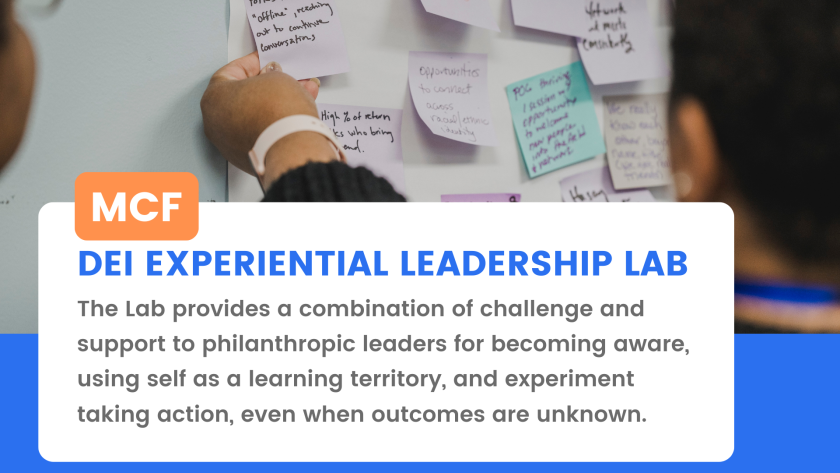
Join Us: Speaking Publicly Workshop - MCF DEI Experiential Leadership Lab
The MCF DEI Experiential Leadership Lab invites you to join us for the upcoming virtual offering on Thursday, May 29th from 9:30-11:30 a.m. CT: “Speaking Publicly: Using Your Individual, Foundation and Collective Voice Beyond Grant Dollars.”
During this lab (no cost for MCF members), you will:
- Explore and learn from the spectrum of ways foundations can use their voice (individually, institutionally and collectively)
- Practice becoming aware and using yourself as a learning territory in developing messaging that aligns with your philanthropic and leadership values
- Learn from real examples using your voice publicly
- Develop approaches for regular, open communication with grantees
- Understand the legal context that supports continued DEI work in philanthropy
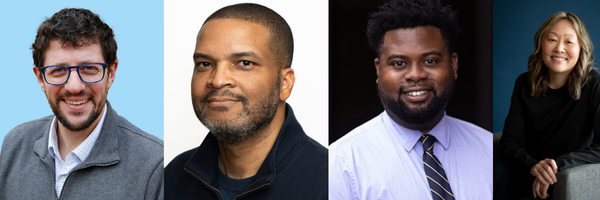
Our Opening Speakers and Moderator:
- Tom Weber, Senior Director of Special Initiatives, Minneapolis Foundation
- Allyn Brooks-LaSure, Vice President, Communications, Robert Wood Johnson Foundation
- Evan Roberts, Communications Officer, Margaret A. Cargill Philanthropies
- Kari Ruth, Moderator, Communications Director, Bush Foundation
Beyond the grant dollars we vote with, we have enormous power in philanthropy with the questions we ask and the issues we raise. Our communities are counting on us to refuse silence and instead, raise our voices–individually, institutionally and collectively–to help create the conditions for a Minnesota where race no longer determines outcomes or predicts success in key areas of life.
As the McKnight Foundation reminds us, "Now is not the time to cower, but to step up and step together across sectors, geographies, and divides in support of the communities we serve and the future we know is possible."
Join Us – Register today for the Speaking Publicly: Using Your Individual, Foundation and Collective Voice Beyond Grant Dollars.
About the Author
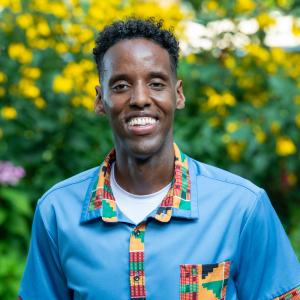
Awale (Wally) Osman is MCF's Director of Organizational Learning and Leadership Development for Equity and Belonging.
Celebrating Patricia’s 22 Years of Service at MCF
Longtime MCF staff member Patricia Starks-Faggett is embarking on a new adventure — retirement!
New Report: Documenting Philanthropy’s Response to Operation Metro Surge
MCF's Rapid Response report documents how Minnesota’s philanthropic sector mobilized more than $70.5 million in aid, and reflects on the information coordination efforts in the wake of Operation Metro Surge.
2026 Legislative Session Wrap-Up: Update on MCF’s Priorities
During the 2026 legislative session, MCF successfully advocated for policies to strengthen the charitable sector, improve state partnerships, and build more resilient communities.