Minnesota’s Common Grant Reporting Considerations: An Opportunity to Focus on Learning and Relationships
The Opportunity
Through the grant reporting process, funders have traditionally sought to follow up on their grantmaking, to understand how a nonprofit has used their grant dollars and to know what difference the dollars are making in the community served. However, nonprofits frequently find grant reporting processes to be burdensome – too long, too complicated, too funder-centered, and too much work for the size of the grant.
As stated by Exponent Philanthropy, “Simplifying grant applications and reporting is one of the most effective ways to reduce the burden on nonprofits and free up their time for mission-driven work. Especially now, every hour spent on paperwork is an hour not spent serving communities. By right-sizing these processes, funders can make a big impact with minimal effort.”
MCF’s Call-to-Action for Funders
In 2026, MCF released this set of Common Grant Reporting Considerations, developed by a committee of nonprofits and funders, to update the common grant report form and offer additional recommendations for enhancing the grant reporting process. Learn how these reporting considerations align with the Minnesota Common Grant Application, updated in 2023.
These recommendations are part of an ongoing effort to educate, explore, and plant seeds to help funders move beyond the limitations of traditional grant reporting. Reporting can be a useful tool that’s mutually beneficial for funders and grantees, supporting both of their missions. Nonprofits often want to share their stories, and funders often want to better understand their partners’ work. Reporting can be an opportunity for shared learning, deepened relationships, and continued funding.
The 2026 Minnesota Common Grant Reporting Considerations emphasize relationship building.
Unlike past versions of the Common Grant Report, these guidelines emphasize the value of feedback as a two-way endeavor. You’ll find questions that ask nonprofits to evaluate the grantmaking experience with a funder, as well as questions that evaluate the use of funds. The guidelines lean in to a trust-based approach while providing options to choose between a written report or non-written reports such as site visits, storytelling, or even the elimination of grant reporting, entirely. Together, these changes point toward a leveling of the power between grantmaker and grantee partner.
Funders can explore various grant reporting options as they work to achieve their dual data goals of due diligence and community impact.
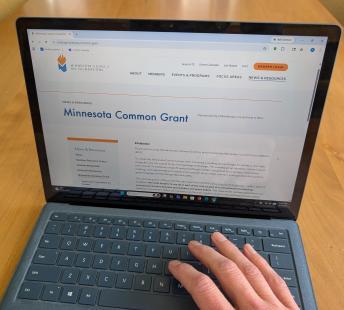
Some funders may use the 2026 Minnesota Common Grant Report Form exactly as written, allowing nonprofits to see standard questions from multiple funders. This allows nonprofits to engage in less customization for bespoke grant reports, lower the reporting burden, and plan ahead for their annual reports.

Other funders may incorporate some of the questions from the Minnesota Common Grant Report Form into their custom report. They may add their own questions, developed by the funder or nonprofit. For the common grant questions, please use the exact questions, without adaptations.

Meanwhile, some funders may offer choices to grant recipients about how they want to share their story. It may include opportunities for oral reporting through a site visit, a video, or other oral tradition. The questions on the Common Grant Report Form may formulate the basis for the site visit or storytelling process.

Finally, some funders may rely entirely on their own research about a nonprofit, including a nonprofit’s publicly available data. Others may engage external evaluators to measure impact, without putting the burden on the nonprofit. Thus, they eliminate the need for any type of funder-required grant report.
Recommendations: What funders should consider before finalizing their grant reporting process:
- Start with Why: The best use of the Common Grant Report Form is to use it exactly as presented, without any additions. However, many funders have custom data needs that are not collected via the Common Grant Report Form. If you are considering adding custom questions beyond the four narrative questions in the Common Grant Report Form, why do you want to ask certain questions? What purpose will they serve? And who will benefit from the data that you’re collecting? Asking yourself these questions will help you to eliminate unnecessary questions and lessen the burden on grantee partners.
- Focus on Learning and Relationships: The primary goal of grant reporting is to foster ongoing learning and build stronger relationships. How can you adjust your reporting requirements to accomplish these goals?
- Consider Flexibility in Format: Instead of only allowing answers via a rigid report, consider allowing options such as optional questions, oral presentations, face-to-face conversations, or even site visits to allow grantees and their community members to share their experiences in a way that best suits their capacity, cultural traditions, and needs. By making these formats optional – rather than a requirement – nonprofits can choose a format that fits their style and culture, without creating an unnecessary burden.
- Emphasize Qualitative Insights: Beyond quantitative data, consider the value of qualitative information such as personal narratives, community stories, testimonials, and the nuances of local context, to provide a deeper understanding of impact.
- Generate Two-Way Communication: The Minnesota Common Grant Report Form promotes dialogue and feedback, where both the funder and the grantee partner can contribute to strategy and adapt their approach based on what they are learning from the project and from one another. How are you encouraging shared power via two-way communication?
- Integrate Nonprofits’ Existing Budget Formats: Rather than requiring nonprofits to use a funder’s budget template or other financial documents, consider the option of allowing nonprofits to use their own existing budget documents. This saves significant labor that would be required to re-format a budget into a funder’s preferred format.
- Build Transparency and Honesty: Two-way communication helps encourage honesty about challenges, setbacks, and even "mistakes," viewing these as opportunities for learning and growth rather than failure.
- Reduce the Burden on Grantees: By streamlining the reporting process and offering flexible formats, funders can reduce the time and resources grantee partners spend on administrative tasks, allowing them to focus more on their mission-critical work. For example, if you currently utilize interim reports, consider whether the burden is worth the value of the additional work.
Download the current Minnesota Common Grant Report Form now
- Grant Report Form without Instructions (Microsoft Word Version) (this version is best for filling in your own answers)
- Grant Report Form with Instructions (PDF Version | Microsoft Word Version) (this version is meant to support you the first time you're filling out the report)